Our Schools, School-Houses and Schoolmasters of Long Ago
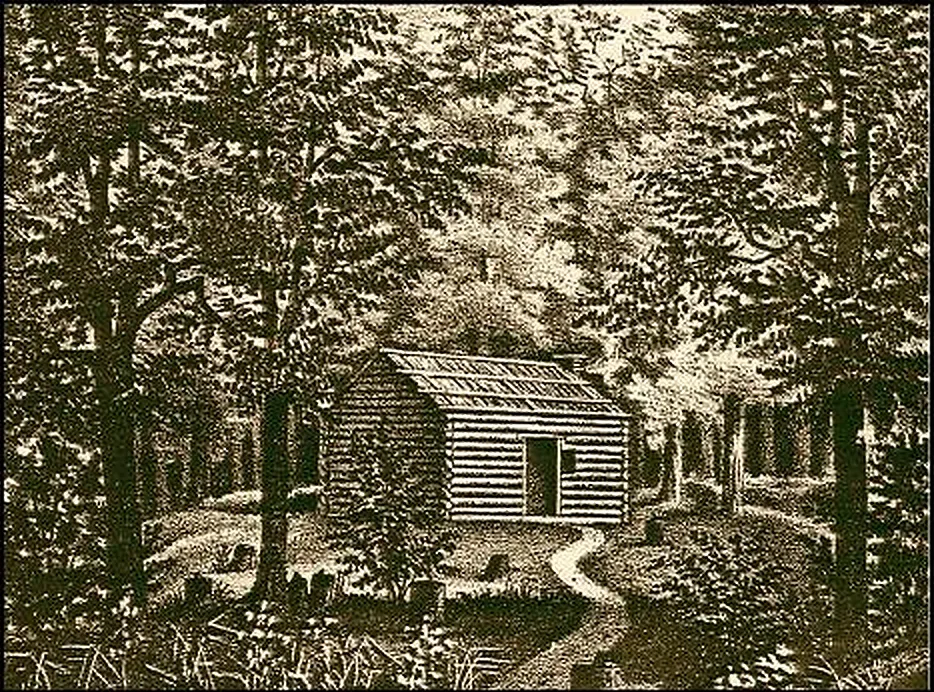
These two articles appeared in the second half of 1887 in volume 56 of Arthur's Home Magazine, less than a year before Rice died. They are not stories but a plain account of how schooling worked before Ohio's free school law, drawn from the Berryhill schoolhouse near her home, built in 1816 and used until 1835.
She describes the building log by log, the oiled paper windows and the sycamore slab desks, then the economics: subscription papers signed by fathers at about four dollars a child a year, teachers at ten dollars a month paid partly in wheat delivered to named mills, and the custom of boarding round a week in each family. She records the books in use, the full names children answered to at roll call, the last-day whisky treat on a fence rail, and the Scottish master William Maxwell Adolphus Johnson, who died suddenly at forty-five leaving a novel in manuscript in his knapsack.
Perrysville's first schoolhouse was built in 1816 and taught by Asa Brown, who appears here as the Yankee schoolmaster with a cure for dog bite. Johnson is recorded as having taught in private homes before that.
Contents
- No. 1Our Schools, School-Houses and Schoolmasters of Long Ago, No. 1one page
- No. 2Our Schools, School-Houses and Schoolmasters of Long Ago, No. 2one page
No. 1. Our Schools, School-Houses and Schoolmasters of Long Ago, No. 1
Describes the Berryhill log school-house built in 1816, with its greased-paper windows and puncheon seats, the district meeting that hired the master, and the stern teachers who ruled by main strength.
No. 2. Our Schools, School-Houses and Schoolmasters of Long Ago, No. 2
Continues the school series with long full-name roll calls, Whig and Democrat quarrels in the 1840 campaign, and the lonely schoolmaster William Maxwell Adolphus Johnson, buried in the old Berryhill graveyard.
Questions
Is the Berryhill school a real place?
Rice gives it a build date of 1816, a frame replacement in 1835 and a graveyard that bears its name, and she writes about it as her own neighborhood. We have not found it under that name in the sources used for this site, so treat the name as hers.
Why are these in the story list if they are articles?
Because they belong with the stories about schools. First Day of School, Log School, Blockhouse and Indian Village and The Yankee Schoolmaster cover the same ground in story form, and all five pieces are best read together.