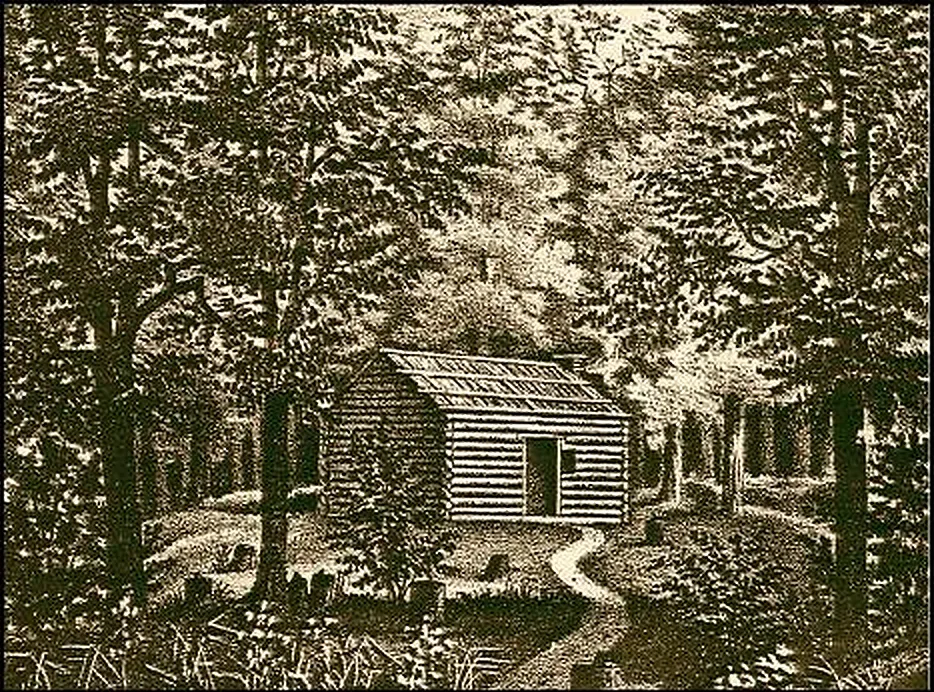
1875 · 12 numbers
Fifty Years Ago, or The Cabins of the West
- No. 1Poor Kitty Sommers
- No. 2The Old Pettingill Farm
- No. 3First Day of School
- No. 4Tom and Bessie
- No. 5Frontier Neighbors
- No. 6Coming to Ohio
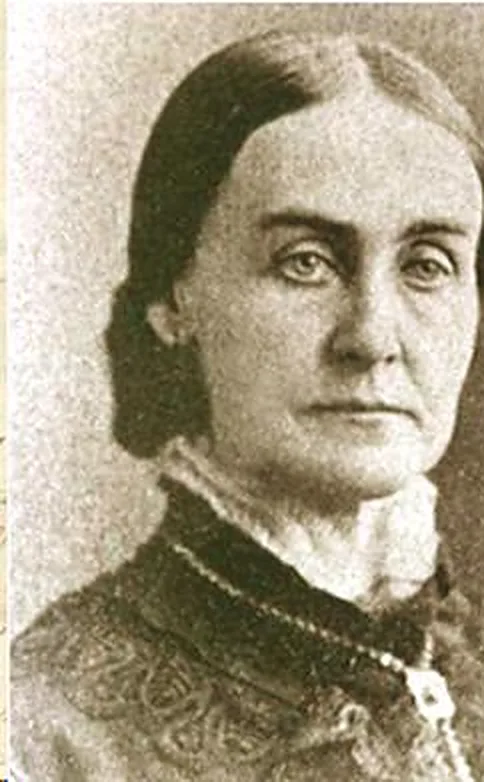
Stories of the Ohio frontier · Arthur's Home Magazine
Rosella Rice grew up among the first settlers of Green Township, Ohio, and spent forty years writing down what they told her. This archive gathers her pioneer stories in one place.
Rosella Rice was born on August 11, 1827, in Green Township, then part of Richland County and after 1846 part of Ashland County, Ohio. Her grandparents Ebenezer and Martha Rice had come from Massachusetts by way of Vermont, New York and Licking County, arriving in 1810 to clear a farm out of the woods. Her father Alexander was nine years old on that trip. Rosella was the eldest child of Alexander and Sarah Johnson Rice, who met and married on the frontier in 1825. She never married, raised a daughter and two half siblings on her father's farm outside Perrysville, and died in the house where she was born on June 6, 1888.
She started early. Her letters and articles were appearing in the Ohio Cultivator in Columbus by 1845, and she wrote one novel, Mabel, or Heart Histories, in 1859. The magazine she served longest was Arthur's Home Magazine of Philadelphia, published by T. S. Arthur from 1852. Her first pieces there, in 1854, were signed simply Rosella. Later she used her full name and three pen names: Pipsissiway Potts, who tucked household hints into her stories, Chatty Brooks, who kept a boarding house for young women, and Mrs. Sam Starkey, a gossipy old lady with a sense of humor. The magazine said in 1892 that readers all over the country felt they knew her.
In the 1870s she wrote three series for Arthur's about the Ohio frontier: Fifty Years Ago, or The Cabins of the West in 1875, Old Hearth Stones, and the Tales They Tell in 1876, and Fading Footprints, or The Lowly Lives of Long Ago in 1879. A pair of articles on the old log schools followed in 1887. Several begin the same way, with the writer standing on a heap of hearthstones where a cabin once stood, and often an old neighbor or her own father, Aleck, starts to talk. Her 1876 sketch of Johnny Appleseed, whom she knew as a child, became her best known work and one of the main sources for his legend.
What makes these stories worth reading now is the detail the county histories left out. Rice tells you how a bedstead was bored into a cabin wall, what a bride packed in three pairs of old linen trousers, how a circuit rider was paid with a puppy, and how two women found each other's cabins through four miles of woods. She writes from a woman's side of the hearth, and she writes down the speech of people who were children when Greentown was still a Delaware village. Peggy Mershon of the Butler-Clear Fork Valley Historical Society collected these texts for a website that ran from 2011 to 2017. This is a restoration of that work.
1875 · 12 numbers
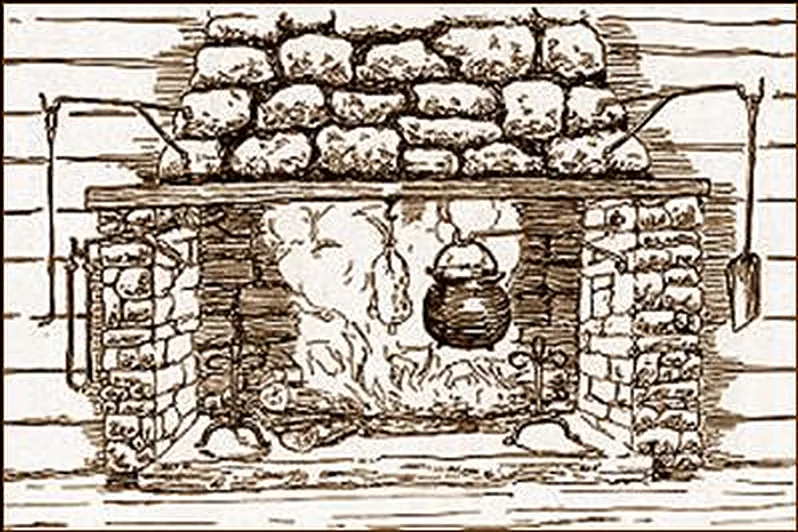
1876 · 4 numbers
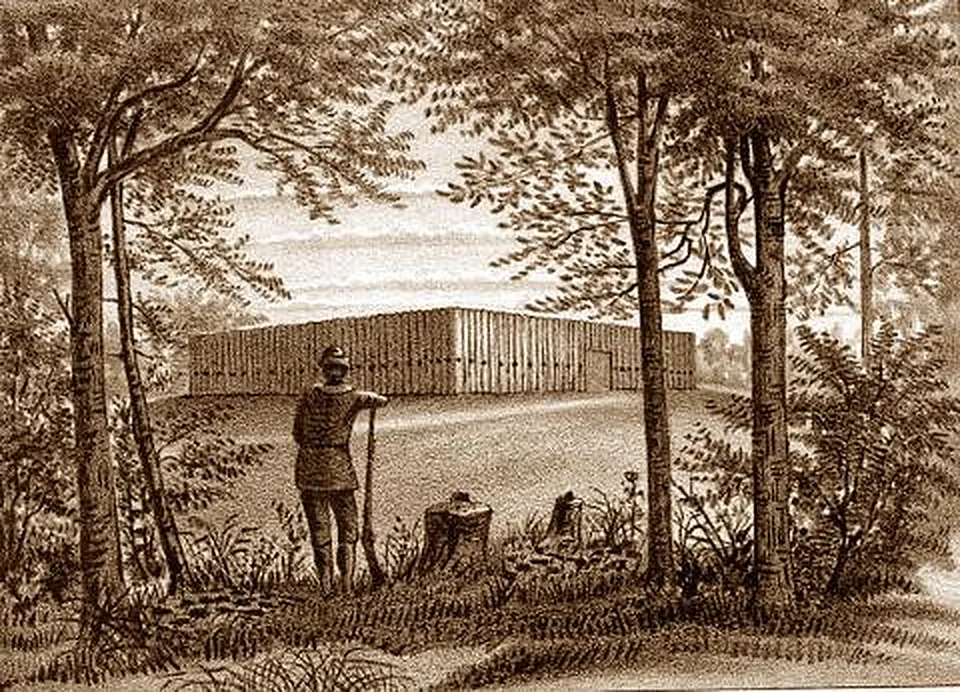
1879 · 5 numbers
From the archive · 1876
Rosella’s 1876 portrait of Johnny Appleseed, John Chapman, as her family knew him: a Swedenborgian nurseryman who slept in their grandfather’s cabin, planted orchards across Ohio, and left a coat the children played in.
Arthur's Home Magazine, 1876, and the piece Rice was best known for. She first described John Chapman in the 1863 History of Ashland County; Harper's drew on her in 1871. Here she adds what she saw: the Quaker coat he traded for trees, the pasteboard hat, the sewn sack of seeds, his nursery by the creek, his farewell round in 1838. Chapman was born in Massachusetts in 1774, not Boston in 1775, and died near Fort Wayne on March 18, 1845, not 1847. His grave site is disputed.
Born in 1827 in Green Township, now Ashland County, Ohio, Rosella Rice was the daughter and granddaughter of the earliest settlers there. After establishing herself as a writer for national magazines in the 1860s, she included thinly veiled accounts about her own family.
In the 1870s, she wrote three series of stories for Arthur’s Illustrated Home Magazine about life on the Ohio frontier — “Fifty Years Ago, or the Cabins of the West” in 1875, “Old Hearth Stones, and the Tales They Told” in 1876 and “Fading Footprints, or the Lowly Lives of Long Ago” in 1879.
These stories were distinctly from a woman’s point of view, and the details she includes usually cannot be found in the often-quoted local histories written by men. Rosella describes what people wore, how their cabins were arrang-ed and decorated, what they ate, their relationships within the family and within their communities, what made them happy and how they dealt with loneliness in the sparsely populated land.
So, we gathered these stories in one place and offer them again to those who wish a more personal look at this period in history in this particular place.
But before you start reading her published articles, I suggest you go here and read an address she gave in 1879 to the Ashland County Association. It was published in 1909 in A.J. Baughman’s History of Ashland County. In a more direct and critical voice than you’ll find in her stories, she explains her dedication for keeping Ohio pioneers alive in the minds and hearts of their descendants. Her address begins:
There is a vast store of rich material almost untouched lying waiting for some writer who will hold the mirror up to nature and give us pictures of the people and the manners and customs of early times. . . .
The Johnny Appleseed connection
Rosella’s main claim to fame after her death in 1888 was that she was a Johnny Appleseed biographer, having written this article about him in 1876 in Arthur’s Magazine. Her information again came from her family and, in this case, also from her personal experience.
Johnny Appleseed, born John Chapman, has become a mythical figure but he was quite real and lived more years in the Richland/Ashland County areas in Ohio than any other place. He planted apple trees, owned nurseries and orchards and sold seeds and saplings to the early pioneers. He also slept on the floors of their cabins and preached to them his Swedenborgian faith.
His half sister, Persis, and her husband, William Broome, were early residents of Green Township, and Johnny visited them often. He also became friends with the Rice family. As a child, Rosella knew him well until he left the area for Indiana in the late 1830s.
Some say she corresponded with him until his death in 1845, but no letters have been found.
More about her life and family → · How this archive was restored
An Ohio writer, poet and lecturer, born in 1827 near Perrysville in what is now Ashland County and died there in 1888. She published hundreds of magazine pieces over about forty years, most of them in Arthur's Home Magazine of Philadelphia, and is best remembered for her stories of pioneer life and her recollections of Johnny Appleseed.
Nearly all of them in Arthur's Home Magazine between 1854 and 1891. The three big series ran in 1875, 1876 and 1879, the school articles in 1887. A few pieces on this site come from newspapers: the Mansfield Herald, the Cleveland Plain Dealer and a clipping that records a talk she gave at a golden wedding in 1879. Her 1879 address to the Ashland County Association was printed in A. J. Baughman's History of Ashland County in 1909.
They are a mix. Some read as fiction, with names we could not trace. Others, like Coming to Ohio, Father's Stories and the visit to the Copus massacre site, are family and neighborhood history told in the voices of people who lived it, and the dates and places line up with the local histories. Rice grew up listening to old settlers and wrote it down later. Each story page here has a short note on what can be checked.
John Chapman kept nurseries along the Mohican River, including near Perrysville, and his half sister lived in Green Township. He stayed at the Rice farm, slept on the floor by the fire and read to the family from his Swedenborgian books. Rosella knew him until he left for Indiana in the late 1830s. Her descriptions of him, first printed in 1863 and reworked for Arthur's in 1876, were widely copied and helped turn him into a folk hero.
Peggy Mershon, a former newspaper journalist and curator of the Butler-Clear Fork Valley Historical Society in Butler, Ohio. She started it in 2011 after the museum received a donation of Rice family papers, and she collected the stories from scanned magazine volumes. The site went offline after 2017. This archive restores her texts from Wayback Machine snapshots and is not affiliated with her or the society.
The stories are nineteenth century works whose copyright has long expired, so the texts themselves are public domain. If you quote them, a citation to Arthur's Home Magazine with the year is the useful form. The short editorial notes written for this restoration are ours; a link back is appreciated.
Writing about a nineteenth-century life or its literature? A clear approach to literary analysis carries a reading from the page to the paper, and an essay tutor can go over a draft.