Old Hearth Stones, and the Tales They Tell
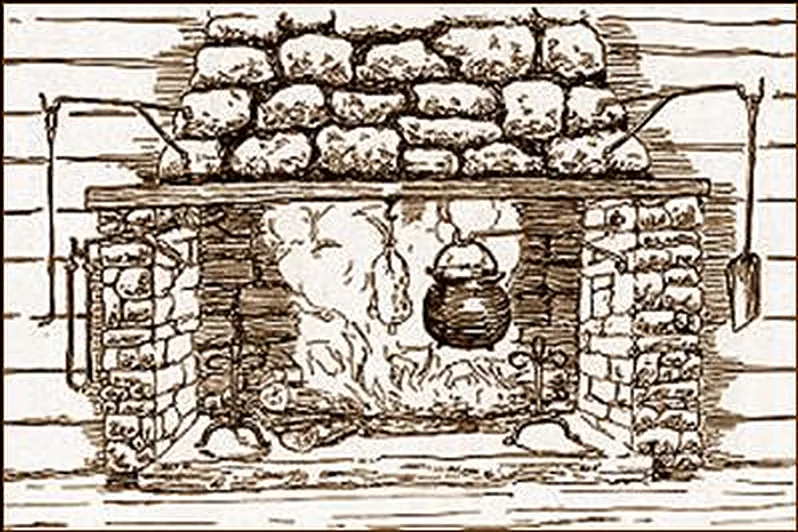
The second series ran in volume 44 of Arthur's Home Magazine in 1876, the same year the magazine printed her sketch of Johnny Appleseed. The device is the same as before, a heap of hearthstones and a story, but the first number is the most historical thing she wrote. It describes a drive in October to the Copus farm on the Black Fork, where on September 15, 1812, Reverend James Copus and three soldiers were killed by Delaware, Wyandot and Mohawk men after the army had burned their village at Greentown. Rice heard the story from a son of the family on the spot and later met the widow and the daughter who was shot as a baby.
The other three numbers are stories of the kind Rice liked best: a captain from Vermont whose cabin was said to be haunted, a brother and sister who visited a fortune teller in a Massachusetts cave and spent their lives waiting for the prophecy, and a schoolmaster hired at a meeting in November 1820 who rescued a girl tied to a bedpost. The fourth number is split across two pages.
Together they show how much of the frontier's mental furniture was fear and omen: witch precautions at the door, warnings of death, a man's secret buried with him after his peddler's tin box goes missing.
Contents
- No. 1Visiting the Site of the Copus Massacreone page
- No. 2Cap’n Marshall’s Haunted Cabinone page
- No. 3The Fortune-teller and Fateone page
- No. 4The Yankee Schoolmasterp. 1p. 2
No. 1. Visiting the Site of the Copus Massacre
Rosella and her friend Annie spend an October day driving to the Copus place, where the Copus and Seymour families were killed in the Indian troubles, and she hears the story from an old survivor.
No. 2. Cap’n Marshall’s Haunted Cabin
Cap’n Marshall’s log cabin is said to be haunted. A schoolgirl repeats what Martha Ellen Brown told her, and the story turns to the captain’s unhappy marriage and a rusty tin box found years later.
No. 3. The Fortune-teller and Fate
Aunt Patty tells her visiting nieces why a grave lies on an abandoned hillside: the story of Mercy Truman, her brother Luke Flemming, a fortune-teller’s forecast, and the harm drink did.
No. 4. The Yankee Schoolmaster
Page 1: on 18 November 1820 a school meeting in a log school-house chooses between two candidates, a blacksmith’s son and a stranger from New Hampshire, while Tot Lenox endures her harsh mother at home.
Questions
How much of the Copus story is accurate?
The outline matches the record. Copus came from Greene County, Pennsylvania, in 1809 with seven children, lived peaceably with the Greentown Delaware for about three years, and was killed at dawn on September 15, 1812, after soldiers washing at the spring were attacked. Three soldiers died and a small daughter was wounded in the leg. In 1882 Rice took part in unveiling the monument on the site, and at her suggestion a memorial to Johnny Appleseed was added to it.
Where did the series appear?
Arthur's Home Magazine, volume 44, 1876, pages 15, 129 and 530 according to the bibliography compiled for the original site.